
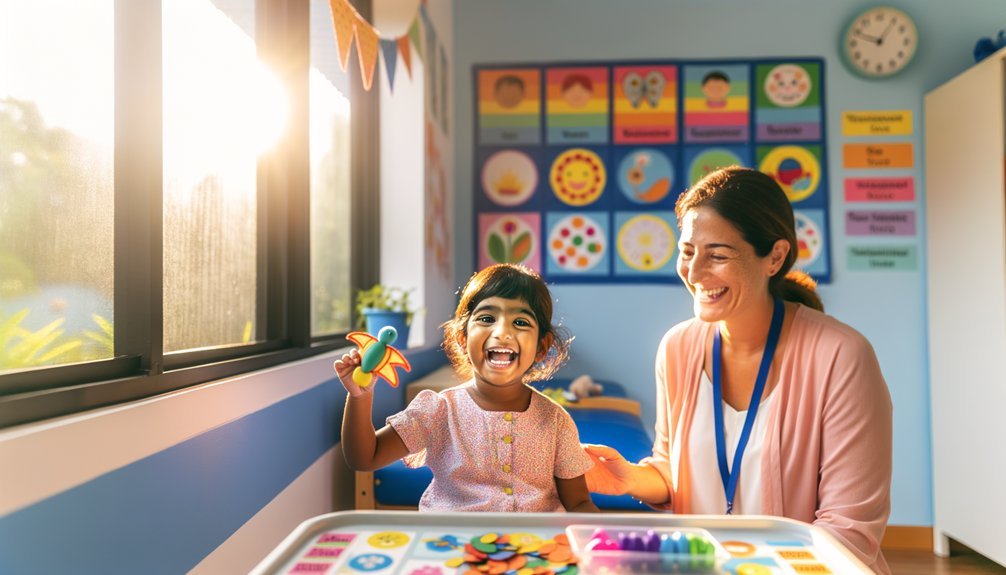
ABA therapists use positive reinforcement to teach new behaviors by rewarding kids for good actions, like completing assignments or exhibiting patience. This approach helps connect the behavior to a pleasant outcome, making it more likely they’ll repeat it. For example, praise or small treats reinforce desirable actions. It’s essential to be consistent and set clear expectations. When you support this at home, it nurtures a positive environment for learning. There’s so much more you can explore about this effective technique!
Key Takeaways
- ABA therapists utilize positive reinforcement to encourage desired behaviors by rewarding children with praise or treats after they demonstrate those behaviors.
- Consistent application of reinforcement helps children associate good behavior with pleasant outcomes, increasing the likelihood of repetition.
- Clear expectations are set for behaviors, allowing children to understand what actions will be rewarded.
- Progress tracking enables therapists to adjust reinforcement strategies based on individual responses and needs.
- Engaging children in the reinforcement process fosters motivation and strengthens their connection to learning new behaviors.
Define reinforcement. 2. Give simple examples. 3. Explain why it works. 4. Encourage parents to use positive reinforcement at home.
Reinforcement is a powerful tool in behavior therapy, especially in Applied Behavior Analysis (ABA). It encourages positive behavior by rewarding it, making it more likely to happen again.
For example, if your child cleans their room and you praise them or give a small treat, that’s positive reinforcement. It works because it connects good behavior with a pleasant outcome, helping your child understand what’s expected.
Using positive reinforcement ABA techniques can make a real difference in your child’s progress. You can implement these autism therapy tips at home by consistently rewarding good behaviors.
Conclusion
By using positive reinforcement, you can create a supportive environment where your child thrives. Celebrate their achievements, no matter how small, to boost their confidence and encourage continued progress. Remember, every time you acknowledge their efforts, you’re helping them build essential skills and a sense of self-worth. Embrace these strategies at home, and watch as your child flourishes. Together, you can make a meaningful impact on their growth and development journey!