
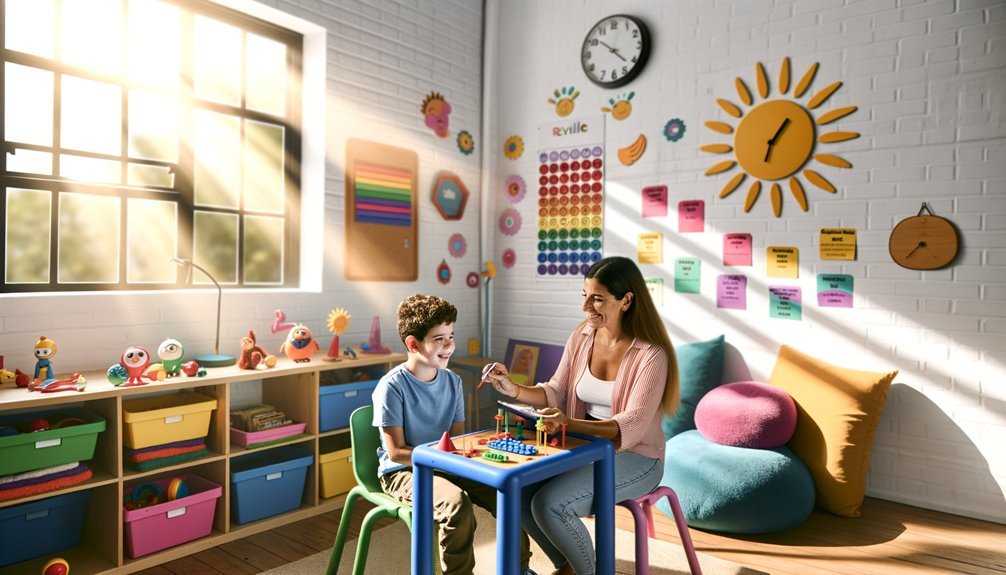
ABA therapy fits seamlessly into your child’s daily life by turning everyday moments into learning opportunities. Snack time can become a fun choice-making activity, while clean-up can transform into a lively game with songs. Establishing routines provides structure, and visual schedules help everyone stay on track. Collaborating with caregivers creates a supportive team environment for consistent practice. You’ll find that small victories are worth celebrating, leading to more achievements in your child’s world of learning. Curious about more tips?
Incorporating ABA Techniques Into Everyday Activities
When you’re juggling daily tasks, it might seem challenging to weave ABA techniques into your child’s routine, but small moments can turn into powerful learning opportunities.
For instance, during snack time, you can use playful learning by letting your child choose between two healthy options. Praise their choice, and watch as they light up with excitement—this is natural reinforcement in action.
While you’re tidying up toys, turn it into a game by singing a clean-up song together. You’ll not only engage your child but also reinforce positive behaviors.
Creating a Structured Home Environment
A structured home environment can make a world of difference in your child’s learning journey. By establishing structured schedules and making environmental modifications, you’re creating a space where your child can thrive.
| Tip | Example |
|---|---|
| Set consistent routines | Morning, snack, and bedtime |
| Designate learning areas | Quiet corner with supplies |
| Use visual schedules | Chart showing daily activities |
I remember when I started using visual reminders for my child’s daily tasks. It helped him shift from one activity to another with ease. These small changes in your home can reinforce the skills your child learns through ABA therapy, paving the way for growth and success.
Collaborating With Caregivers for Consistent Practices
While maneuvering the world of ABA therapy, you might find that collaborating with caregivers can greatly enhance your child’s progress.
You’ve probably noticed how routine reinforcement helps your child grasp new skills. By involving caregivers in the training, you create a consistent environment that reinforces what they learn during therapy sessions.
Imagine one evening, after a long day, you and a caregiver work together on a specific skill. With both of you using the same strategies, your child starts to shine! It’s those little victories that matter.
Plus, regular communication about what works and what doesn’t fosters a supportive team atmosphere. When caregivers are trained and engaged, your child benefits, and you’ll feel more empowered in your journey together.
Maintaining Balance Between Therapy and Daily Life
Balancing therapy with daily life can feel like a juggling act, but it doesn’t have to be overwhelming. You might find yourself rushing from therapy sessions to family dinners, trying to fit it all in.
To make this smoother, try creating a therapy scheduling routine that works for everyone involved. Maybe you set aside certain days for therapy and others for family activities, ensuring you’re not sacrificing quality time together.
Engaging the whole family in this process can make a significant difference. When everyone’s on board, it becomes a shared journey rather than a chore.
Celebrating Progress and Achievements in Daily Routines
Every small victory in your child’s routine can feel like a celebration, especially when you recognize the hard work that goes into those achievements.
Imagine your child tying their shoes independently for the first time. That moment isn’t just about the shoes—it’s about celebrating milestones, acknowledging their persistence, and the countless times they practiced.
When you cheer them on, you’re not just celebrating success; you’re reinforcing the effort they put in. Whether it’s completing homework without reminders or sharing toys with friends, these moments matter.
Conclusion
As you navigate the delightful chaos of daily life, remember that integrating ABA therapy isn’t just about turning your home into a mini therapy center. It’s about sneaking in those techniques between snack time and tantrums, like a ninja of learning. So, while you juggle chores and the occasional Lego explosion, celebrate each small victory. After all, who knew that mastering the art of sharing could be as monumental as conquering a mountain? You’re not just a caregiver; you’re a superhero in disguise.