
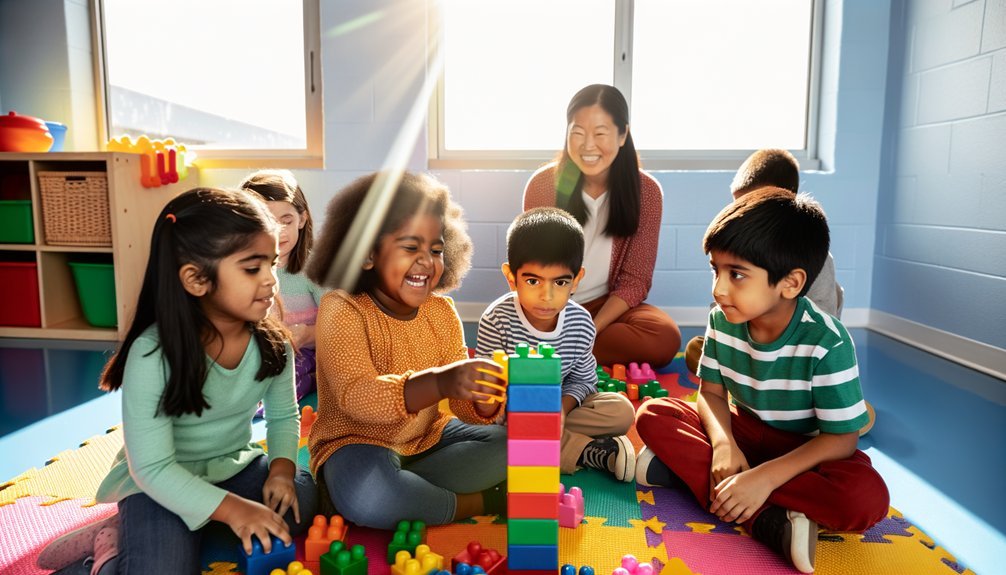
Using play in ABA therapy is a fantastic way to build social skills! Set clear goals like sharing toys and taking turns. Utilize structured play strategies, such as role-playing and engaging games, to make learning enjoyable. Encourage family playtime, as this fosters a supportive environment and strengthens bonds. Regularly assess progress during play to adjust strategies and celebrate achievements. This approach not only enhances skill retention but also creates meaningful interactions. There’s so much more to explore on this topic!
Key Takeaways
- Play-based learning enhances engagement, making social skill acquisition enjoyable and effective for children in ABA therapy.
- Structured play activities help children practice initiating play, sharing, and taking turns in a supportive environment.
- Family playtime reinforces social learning principles, strengthening relationships and promoting effective communication among family members.
- Regular assessment of social skills during play allows for tracking progress and adjusting strategies to meet individual needs.
- Celebrating achievements in social skills boosts children’s confidence, encouraging continued growth and motivation.
Describe social skill goals. 2. Explain structured play strategies. 3. Encourage family playtime.
When it comes to social skills, setting clear and achievable goals is essential for success. In ABA therapy, focusing on play-based social skills can help you create effective objectives. Consider goals like initiating play, sharing toys, or taking turns, which are vital for autism socialization.
Structured play strategies, such as role-playing or using games, can guide your child in practicing these skills in a fun way. Additionally, don’t underestimate the importance of family playtime. Encourage everyone to engage in activities together, reinforcing those ABA social learning principles.
Conclusion
Incorporating play into ABA therapy isn’t just about fun; it’s a vital way to develop social skills. By setting clear goals, using structured play strategies, and encouraging family involvement, you can create an enriching environment for children. As they engage in playful activities, they’ll naturally build communication, cooperation, and problem-solving skills. Embrace the power of play, and watch as children thrive, gaining the confidence and abilities they need for meaningful interactions in their everyday lives.