
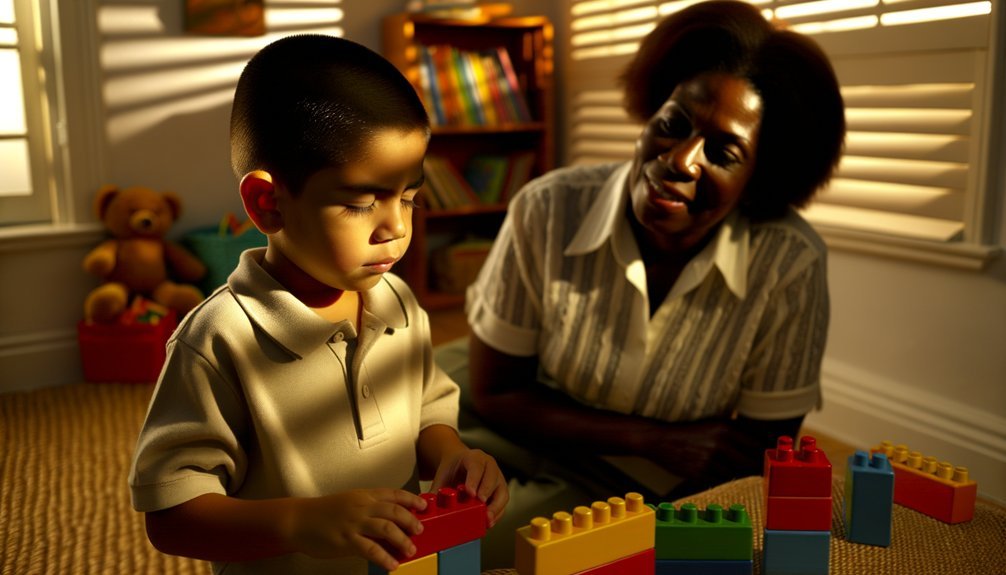
Recognizing early signs of autism can be vital for your child’s development. Look out for limited eye contact, delayed speech, or difficulty in social interactions. It’s important to observe these behaviors without panic, as every child grows at their own pace. If you notice consistent signs, consult with your pediatrician for guidance and possible evaluation. Remember, you’re not alone—ample resources and support are available to help you navigate this journey. More helpful insights lie ahead!
Key Takeaways
- Observe for limited eye contact, delayed speech, and difficulties in social interactions as early signs of autism.
- Monitor developmental milestones to identify potential delays and areas of concern.
- Stay calm and mindful while tracking behaviors; every child develops at their own pace.
- Consult with a pediatrician if consistent early signs are observed for further evaluation.
- Utilize available resources, such as community support groups and educational materials, for guidance and support.
Describe early signs. 2. Emphasize observation, not panic. 3. Suggest next steps.
When you’re watching your little one grow, it’s natural to wonder about their development, especially if you’ve heard about autism.
Early signs of autism can include limited eye contact, delayed speech, or difficulty with social interactions. It’s important to observe these behaviors without panic. Remember, every child develops at their own pace, so focus on their individual journey.
Tracking developmental milestones can help you identify if your child might need further assessment. If you notice consistent early signs of autism, consider speaking with a pediatrician for an autism diagnosis.
They can guide you through next steps, ensuring your little one receives the support they need. You’re not alone—many parents share this experience, and resources are available to help you.
Conclusion
Recognizing early signs of autism can feel overwhelming, but remember, you’re not alone. Stay observant and trust your instincts; it’s okay to seek help if you have concerns. Early intervention can make a significant difference in your child’s development. By understanding the signs and taking proactive steps, you’re advocating for your child’s needs. Reach out to healthcare professionals, gather information, and be your child’s best ally. Together, we can navigate this journey with hope and support.